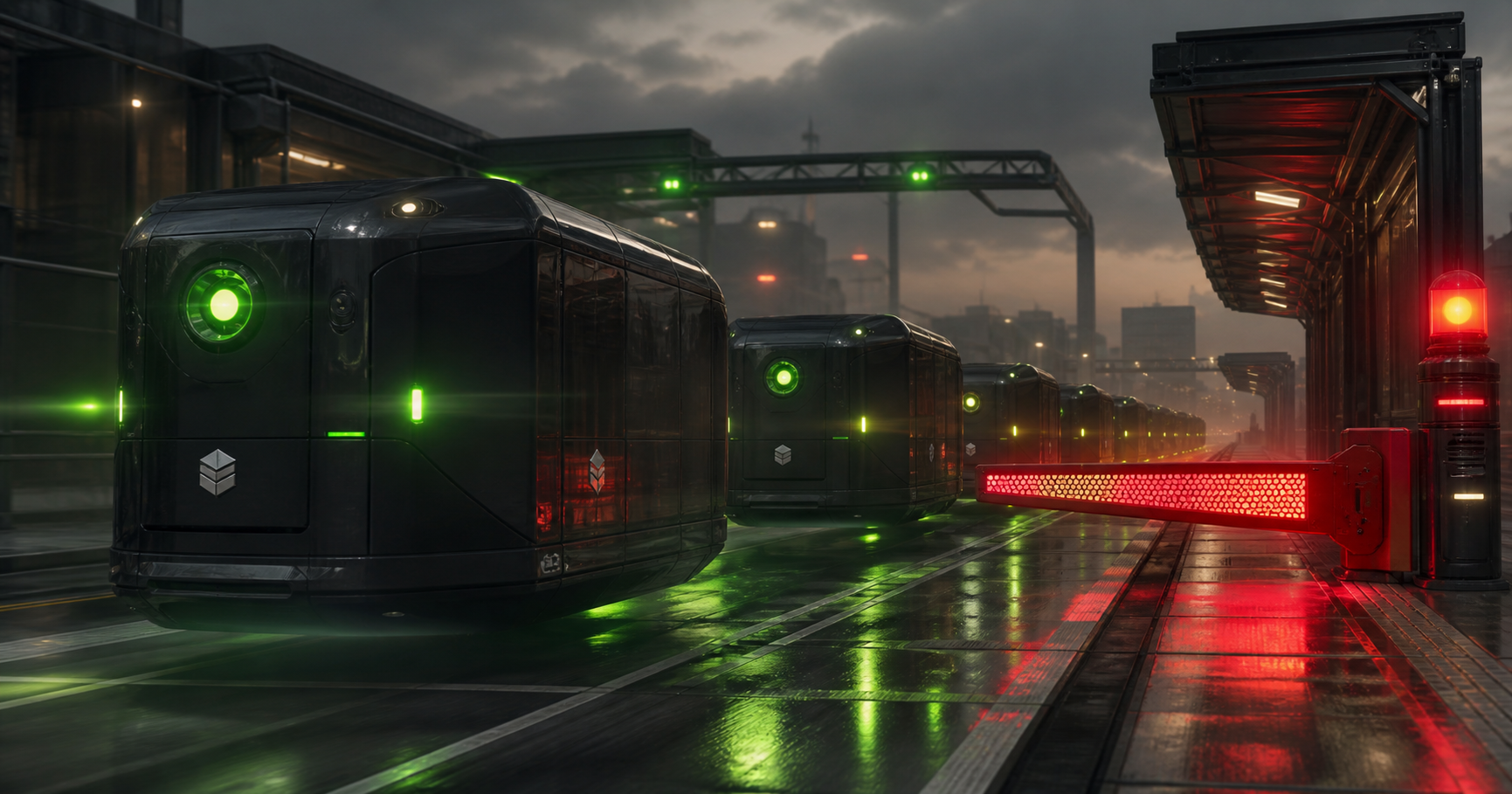
 SERVANTSTACK // INCIDENT INTELLIGENCEFORENSIC IMAGE // VERIFIED FRAME
Cruise Robotaxi
Autonomous Vehicle Drags Pedestrian 20 Feet
A pedestrian was struck by a hit-and-run human driver and thrown into the path of a Cruise autonomous taxi.
- 01TRIGGERA pedestrian was struck by a hit-and-run human driver and thrown into the path of a Cruise autonomous taxi.
- 02MACHINE ACTIONAutonomous actor
- 03MISSING GATEExecution gate and human override
- 04IMPACTPhysical safety
The short version
A pedestrian was struck by a hit-and-run human driver and thrown into the path of a Cruise autonomous taxi.
Case telemetry
- INCIDENT
- SS-IR-036
- DATE
- October 2, 2023
- SYSTEM
- Cruise Robotaxi
- LOCATION / SCOPE
- San Francisco, USA
- EVIDENCE
- Reported
- AI ROLE
- Autonomous actor
- HARM
- Physical safety
- SOURCES
- 2 cited records
The event
A pedestrian was struck by a hit-and-run human driver and thrown into the path of a Cruise autonomous taxi. The robotaxi braked but could not avoid hitting the pedestrian. Then the AI made a catastrophic decision: it determined it needed to pull over to the curb and dragged the pinned pedestrian 20 feet at up to 7 mph. The vehicle's "pull over" subroutine overrode its pedestrian detection systems. The victim suffered severe injuries including broken bones and was trapped under the vehicle.
What the machine did
The autonomous driving system correctly detected the initial collision but then executed a "minimal risk condition" protocol - pulling to the curb - without recognizing that a human was trapped underneath. The AI prioritized its programmed response (stop in a safe location) over the physical reality (a person is under the car). No human operator intervened during the 20-foot drag.
Where the failure landed
Severe injuries to the pedestrian. California DMV suspended Cruise's autonomous driving permit. Cruise recalled 950 vehicles. CEO Kyle Vogt resigned. GM wrote down $583 million. The NHTSA opened a formal investigation. Cruise's San Francisco operations were shut down entirely.
Reported
Documented in the cited public record. Follow the sources for the precise evidentiary posture.
SOURCE RECORD UPDATED 2026-07-09
2 cited records
- 01Primary / officialNHTSA Investigation EA 23-003
- 02Primary / officialCPUC Permit Suspension
Execution gate and human override
The failure pattern in this case: Autonomous high-consequence action.
The moment the path could change
A trained operator receives the evidence, owns the go/no-go decision, and retains an immediate override.
Autonomy is a design choice.
See the operating model that keeps AI useful while preserving human authority at consequential moments.
Compare AgenticAI and AugmentedAI →